
Inspired by a true story. Some characters, situations, dialogue, and chronology have been reimagined or combined for narrative purposes.
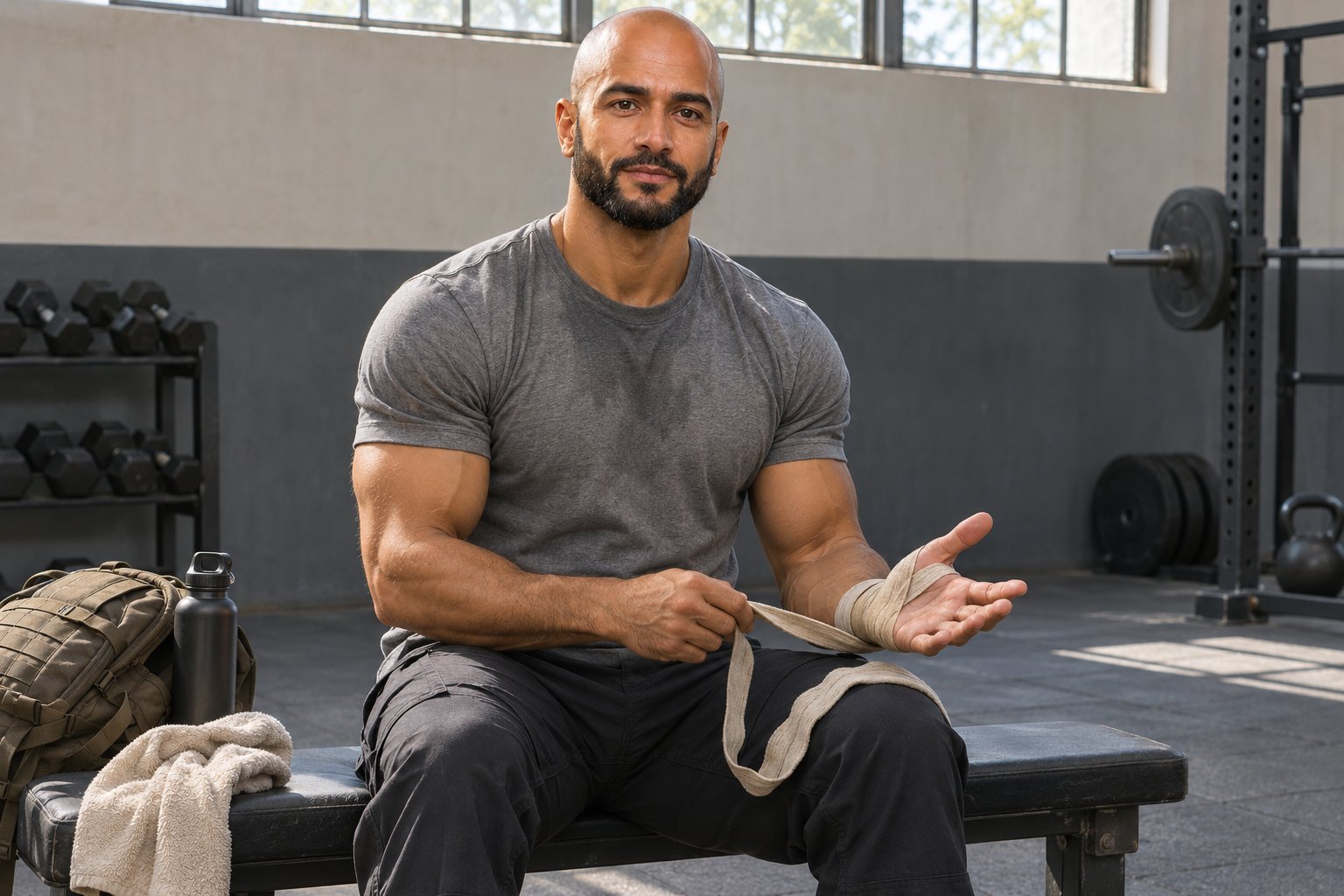
During his lunch break, Ahmad sat on a bench in the gym with a cloth hand wrap between his hands. He began winding it around his palm, then realized he had stopped some moments earlier, the other end hanging above his knee.
He wore a plain gray cotton shirt and dark trousers, his belongings beside him. Daylight entered through a high window; the room held the hum of air conditioning and the faint brush of his shoe against the floor.
The first part of his long workday was over; another part awaited him after the break. He had come to train as usual, but this time he arrived calculating what he would need to finish after returning home.
Over the past nights, he had kept returning to unfinished project work after the house grew quiet. He began with something he expected to be brief, then stayed longer and rose in the morning before feeling that the night had made room for sleep.
Those nights had not all been alike, but their effects met at the edge of the bench. His eyes followed the wrap while his mind continued a conversation nobody in the gym was having.
Usually, he liked to give sport its own time: enter the movement and leave it having made space for his body in the day. This week he had begun measuring it like the rest of his unfinished work.
He resumed winding the wrap, then let it rest on his palm. He had not forgotten how to prepare his hands. His fingers were waiting for attention that had remained somewhere else.
Looking at the dangling end, Ahmad told himself, “Even this has joined the waiting list.” A brief smile crossed his face before he returned to what he was holding.
He finished preparing the wrap without starting over. He held his hands out for a moment, then rose and moved into the training area, wanting to begin rather than keep thinking about beginning.
He moved at an easy pace through familiar movements he had no need to perform for anyone. He was alone in the nearby space, looking ahead so his gaze would not scatter with his thoughts.
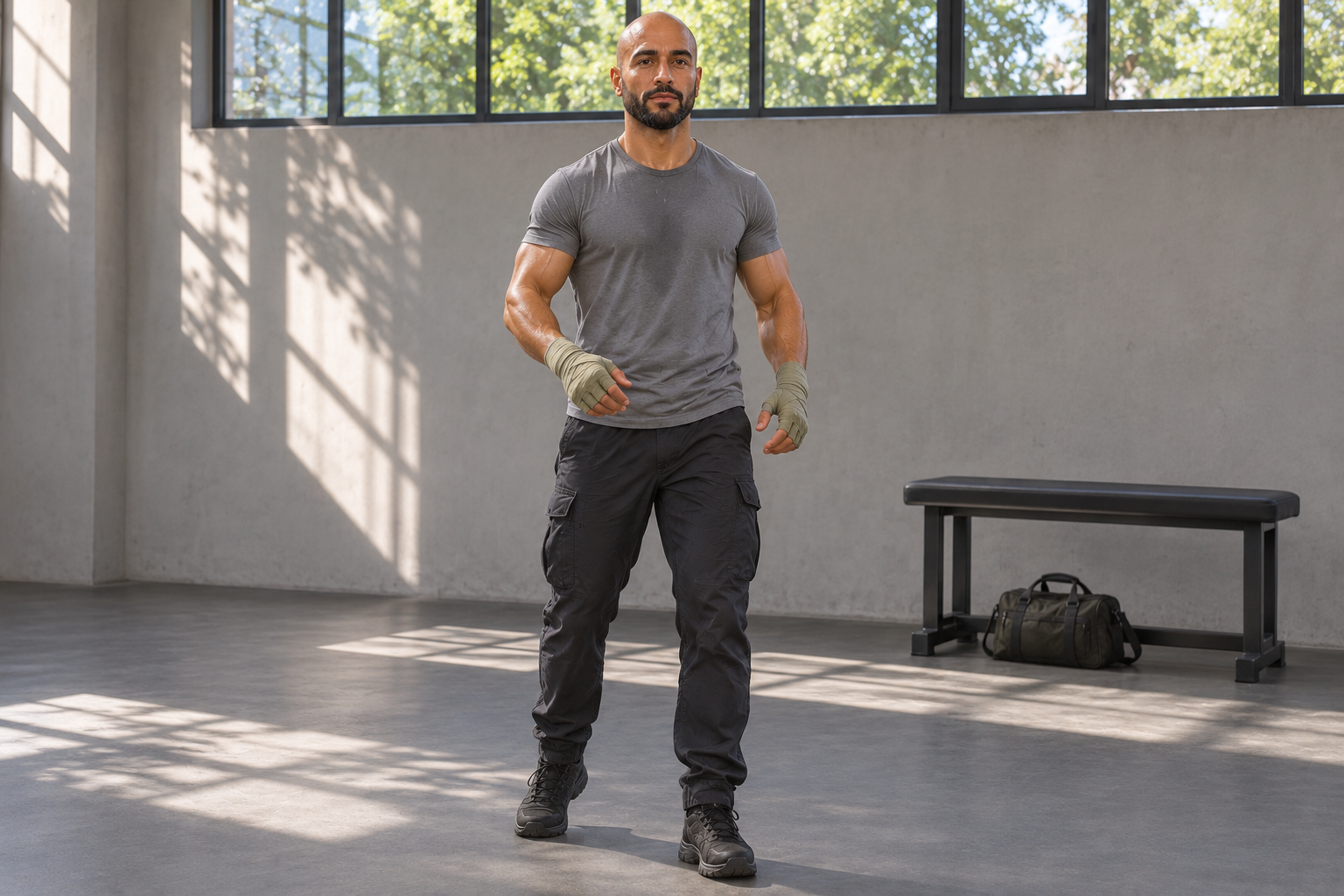
But the sentence he had left in his mind the night before returned at the first pause. As he tried to continue the movement he had begun, he found himself thinking more about sitting down to work again than feeling his feet.
He eased his movement and remained standing. His shoulders stayed tense even when he did not need them; after relaxing them, he tightened them again without noticing until a moment later.
Nobody there was asking more of him. Yet he prepared for each beginning as though someone were waiting for proof that he could still complete it.
He remembered promising his wife a walk that evening. He had suggested a longer route than usual while sitting at home, when the whole distance had seemed like words easily spoken.
He wanted the promise to remain light for her, not follow him into the gym and become another weight. Yet he found himself calculating walking time while standing in the time he had set aside for training.
He returned gently to his movement. He did not speed up to catch anything or add force he did not need; he only tried to stay with it to the end instead of letting his mind run ahead to the night.
When he paused, his hands remained raised briefly without moving. He lowered them and heard the wrap brush his shirt. He was ready to begin another round before asking himself whether he wanted it.
He looked at the bench he had left. It was not far away, yet he stayed standing, as though returning required a greater reason than being tired and unable to find his attention.
He moved toward his usual starting place, then stopped before beginning. He ran a thumb over the cloth around his palm and let his hand fall instead of raising it again.
“That’s enough of this part for today,” Ahmad said quietly. He was not addressing the room or anyone awaiting his verdict. He said it as he turned toward the bench, then walked to it.
He sat and began unwinding the wrap from his palm. The cloth passed slowly between his fingers, his face and shoulders in the midday light. He laid the loosened end on his knee instead of letting it fall.
He opened his palms above his legs and let them be still. He had not finished what awaited him beyond the gym, nor did sitting make the activity in his head stop.
A little of his break remained. He chose to spend it on the bench rather than turn it into another attempt and hurry back to work carrying unfinished training with him.
He listened to the simple sounds around him, then found himself returning to the unfinished work. Whenever he noticed that return, he settled his hands again without beginning another negotiation with himself.
He did not emerge suddenly refreshed. When he stood, the heaviness remained in his legs, but he had not added another round begun merely because its ending would look better in his reckoning of the day.
He gathered the wrap with his belongings and left the bench as he had found it. He returned to the rest of his workday with the walk in mind, but did not lengthen it again while thinking about the way there.
That evening, Ahmad returned to the small villa. He ate, rested briefly, and changed into an olive cotton shirt and comfortable dark trousers. Now he had to decide how to go out, rather than imagine it from midday.
His wife waited at the door in her loose black abaya, long black khimar, and niqab showing only her eyes. She wanted a quiet walk outside the house; she had not asked for a long one.
Ahmad reached into his pocket for the key. His wife handed it to him, then indicated his feet with her eyes. He looked down: house slippers on his feet, walking shoes beside the wall.
“Apparently I’m preparing to leave in installments,” Ahmad said with a smile.
“As long as the last installment comes with us,” his wife replied. He laughed and sat to put on his shoes.
When he stood, he did not hurry to the door. “I’m more tired today than I thought,” Ahmad told his wife. “I want to go out with you, but let’s walk more slowly.” He kept the key in his hand until she finished answering.
“I want to get out and have a change of scene for a little while,” his wife said. “We don’t have to circle the world.” He heard her smile in her voice, then let her go out and closed the door behind them.
At the start of the street, his steps briefly returned to their old pace, as though his body remembered the beginning even without enough left for the end in the same manner.
His wife walked beside him, then half a step ahead. The air was lighter than inside the house, and above her niqab he saw relief in her eyes as she raised her face toward it.
Ahmad let his pace ease. He stopped where the pavement widened until his wife turned toward him, then raised a hand slightly, indicating the step that could no longer match his momentum.
“Let me catch up with my own step first,” Ahmad told his wife. The joke came out quieter than he intended, but he did not apologize for it with more words.
His wife came back beside him. “And I hurried because I was glad to be out,” she said. “I didn’t notice I’d started racing the walk again.” Then she pointed to a bench near the path.
They sat at either end of the bench with room to move between them. Ahmad rested his back and opened his palms on his knees, remembering the cloth passing through his fingers at midday.
This pause did not erase his shortened nights or the work he had left. He still knew what awaited him tomorrow, as a car passed and its sound receded behind the wall.
“I’m happy we came out, even if we sit here a while,” his wife said.
“And I don’t want to turn it into something I have to complete,” Ahmad answered. He looked at his shoes afterward and did not repeat the sentence.
They talked about small things from the evening. When they fell quiet, Ahmad did not ask how much of the route remained, and she did not urge him to get up for the sake of his promise.
Ahmad pointed to the nearer path home. “Shall we return this way?” he asked. “We can walk along the other side of the wall—a loop that fits us tonight.”
His wife looked at the path, then answered, “Yes. And I won’t speed up when I see you quiet.”
“If I’m quiet, I might just be listening to you,” Ahmad said. She laughed and stood with him.
At the nearer path’s entrance, his wife moved slightly ahead, then returned beside him of her own accord. “Walk at whatever pace suits you,” Ahmad told her.
“This is what suits me now,” his wife answered.
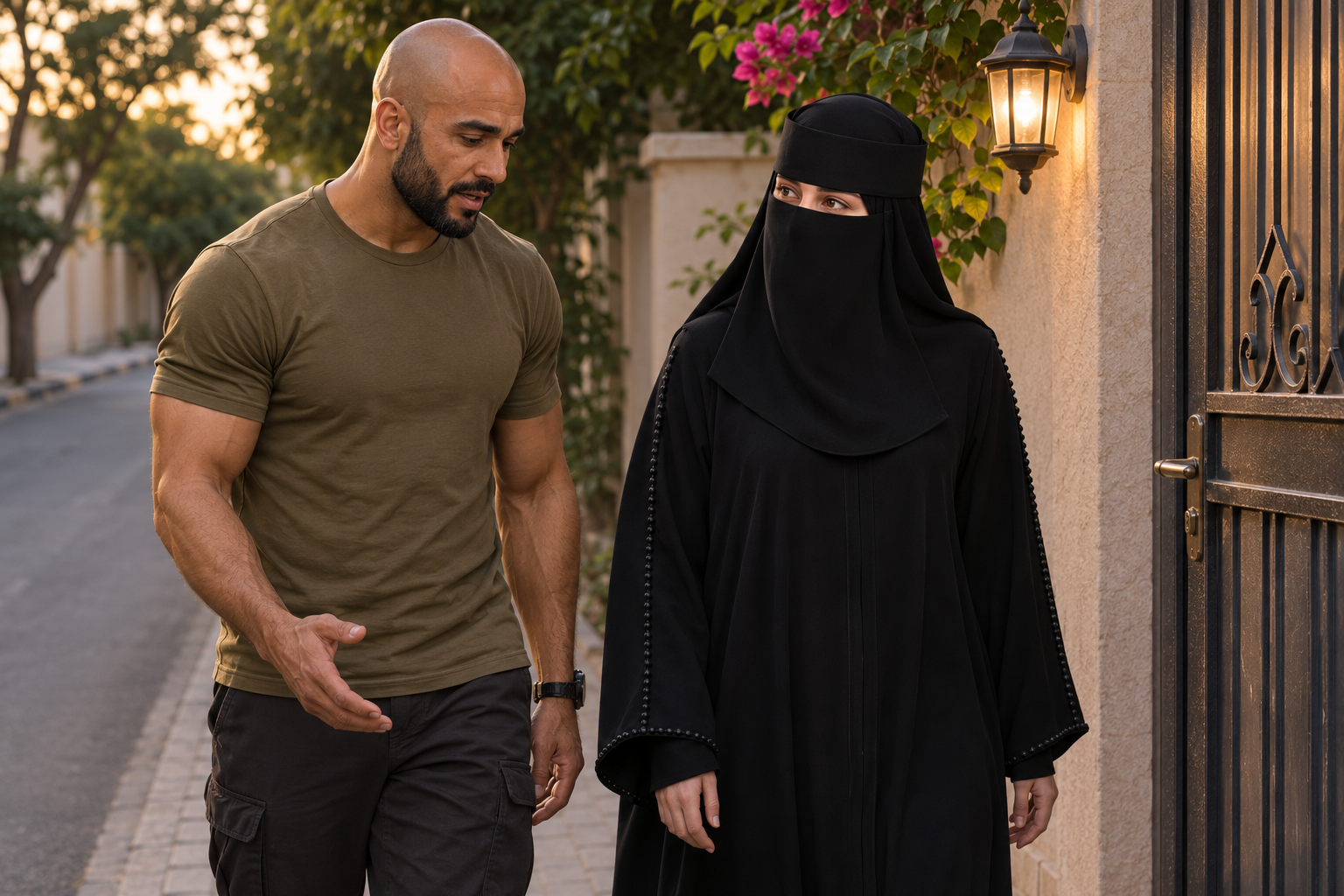
They continued more slowly, the tiredness still in his legs. He did not need to test whether he could quicken whenever the pavement opened out, and left a hand out of his pocket to settle into the walk.
When the villa door appeared, Ahmad found the key on his first try. He lifted it slightly. “This is the only one that finished the walk without a rest,” he told his wife. She laughed and stood beside him until he opened up.
He let her enter first, then sat inside to remove his shoes. He set one beside the other against the wall and looked for a moment at the loose lace without tying it before lifting it.
He put the key in its place and returned to the seat near the door. He did not go looking for a small task to fill the rest of the evening; his shoulders needed to settle against the seat back.
His wife brought two glasses of water. Ahmad took his and shifted the seat a little so she could sit beside him. The work he had left remained for tomorrow; they discussed no new plan for it as they lifted their glasses.
A light breath of air came through the doorway. Ahmad set his glass within reach, extended his arm, and quietly closed the door before resting his back against the seat again.