
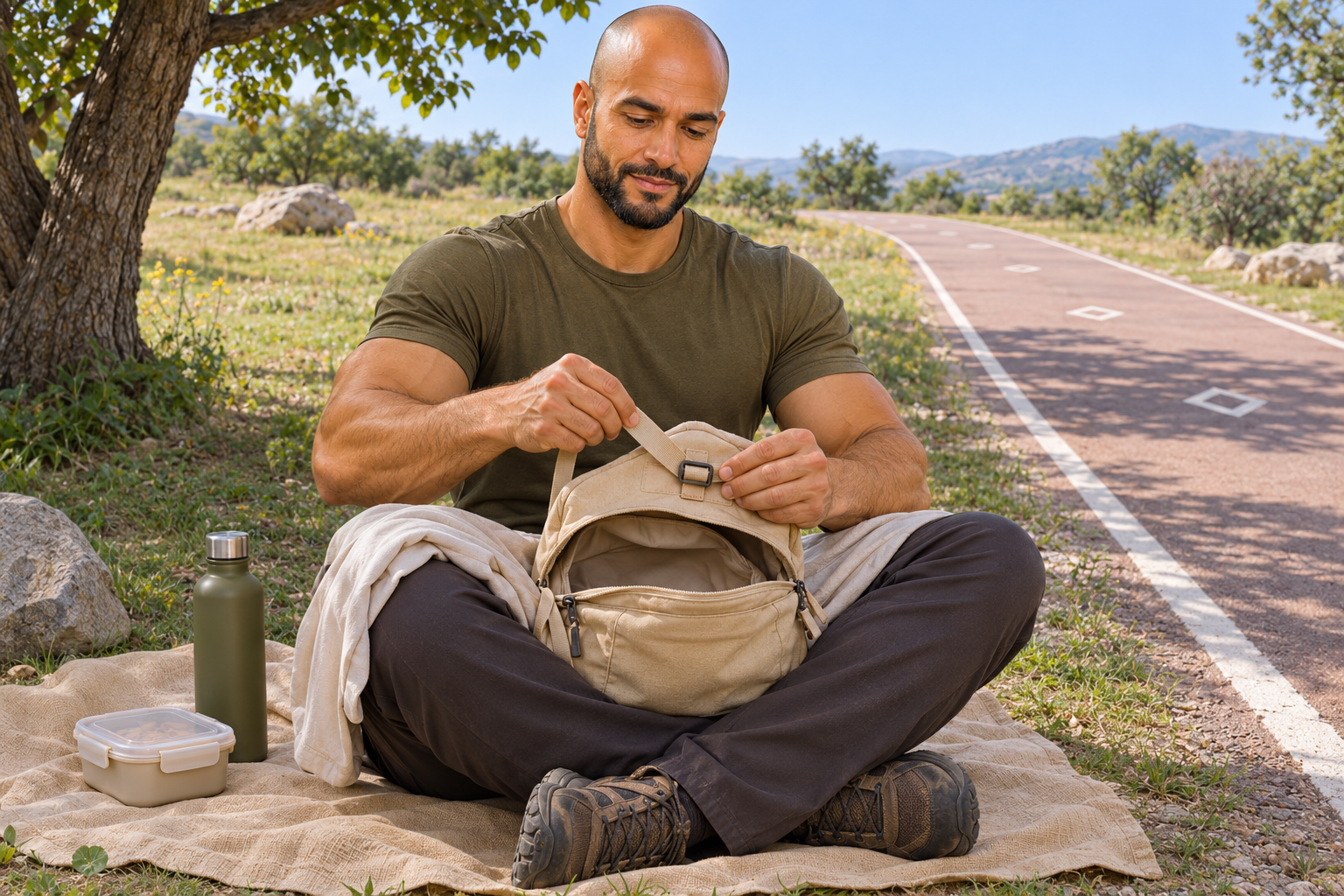
Inspired by a true story. Some characters, situations, dialogue, and chronology have been reimagined or combined for narrative purposes.
Ahmad saw the cloth at his shoe before he understood how it had reached the ground ahead of him. He turned toward his pack: its flap was crooked, the strap hanging loose.
He was walking alone along a clear, permitted footpath on flat ground in the afternoon light. Ahead lay a broad bend; behind him was the same stretch he had just followed. He wore a short-sleeved olive cotton shirt, dark trousers and walking shoes.
He had planned no long expedition: reach the bend, sit for a while, then return before the light changed. He liked a walk whose end he could see, rather than a list to finish.
Over his shoulder was a light pack containing a sealed water bottle, a small food container, a folded light layer of clothing, and the cloth now lying at his foot.
He picked up the cloth and shook off the dust. As he lowered the pack from his shoulder, the flap opened farther, and the closed container rolled a short way along the path’s edge.
The container stayed shut. It came to rest against the folded clothing that had slipped out after it, while the bottle remained at the bottom of the pack. Ahmad looked at his belongings, spread around him in an arrangement he had not chosen.
Bending toward the container, Ahmad said to himself, “Looks like my things want a walk of their own.” He set it on the cloth, where he could see everything.
The strap ran through a small buckle on the flap. He took its end and pulled; the whole length slipped through his fingers. The buckle remained in place, leaving nothing to hold the flap down.
Ahmad looked toward the bend. It was nearer than it had first appeared, and he considered carrying everything there in his hands and sorting it out once he sat down.
He gathered the container and clothing under one arm, holding the cloth and pack in his other hand. After two steps, he had to lift the clothing’s edge before it touched the ground.
He shifted the container into his palm. With no comfortable place left for the pack, he held it by the top and pressed the flap shut with his thumb. Now he watched what he carried more than the path ahead.
At a wider patch along the path’s edge, he stopped and laid everything on the cloth. A light breeze lifted one corner; he held it down with the food container.
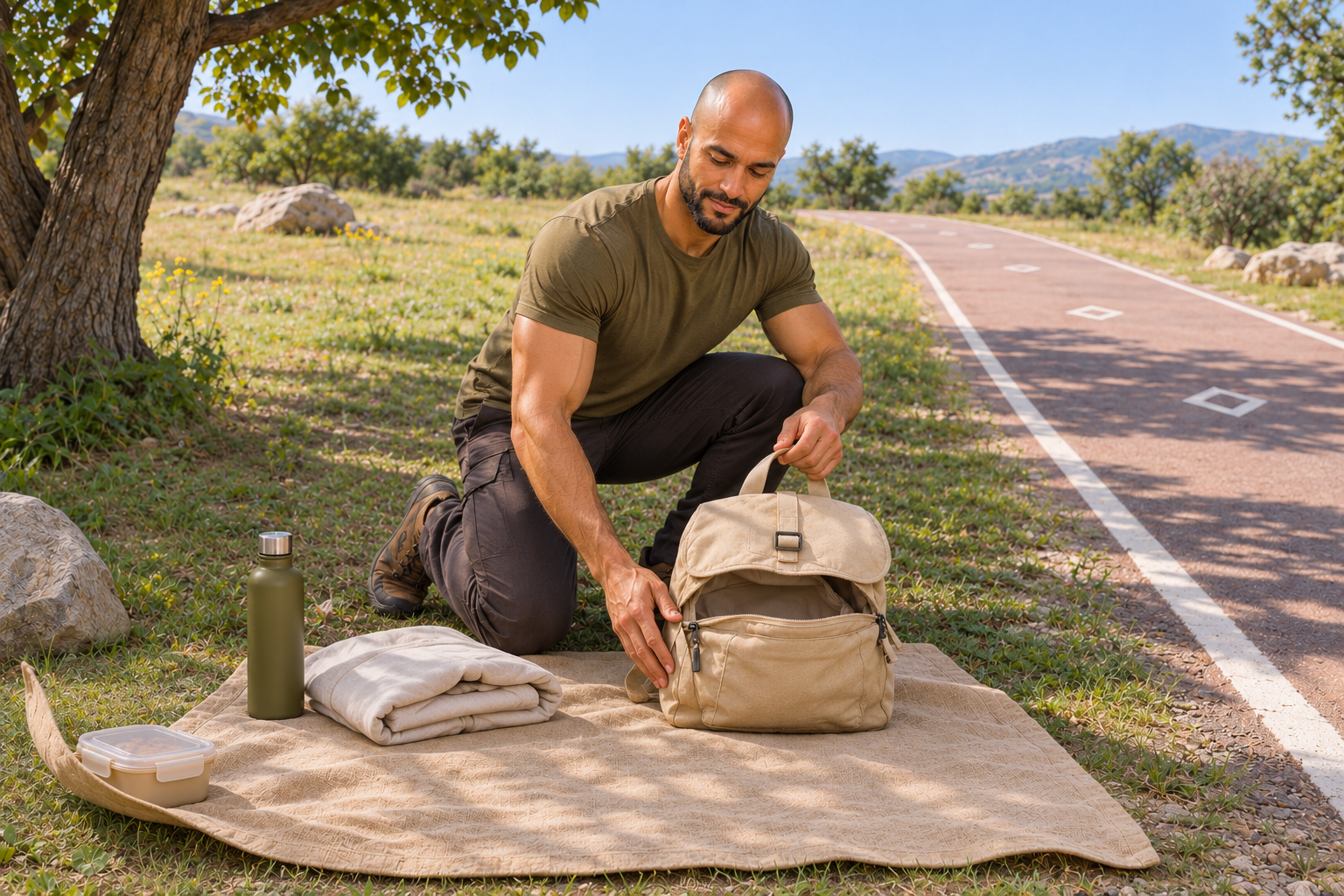
For a moment he held his empty hands in front of him. He had wanted a walk that asked nothing of him; instead, he was calculating where each finger should go to keep something from falling.
There was no visible tear in the pack. He lifted the flap, ran his fingers over the strap’s attachment, and looked at the buckle again. Everything was there, but one end would not stay where he put it.
He could sit here, but he did not want his walk to end at the first spot the container happened to choose. He drew the strap aside and tied a quick knot around the buckle.
He tightened the knot, returned the clothing to the pack, and put the container on top. He pressed down the flap and lifted the pack by its carrying strap. It hung before him as though it had finally agreed.
He gave it a small shake above the cloth. Nothing fell. Ahmad smiled, gathered up the cloth, and put the pack on his back, testing the freedom of his hands.
He walked slowly at first. He heard his shoes brush the ground, then felt his steps finding their rhythm again. The bend was still ahead, and the interruption seemed unlikely to take much from the walk.
A few steps later he felt a light tapping against his back. Reaching behind him, he touched the strap’s end; it was longer than he had left it. He stopped before the flap opened.
He lowered the pack and this time kept it upright between his feet. The knot had loosened, letting a little more strap slip through whenever the container’s weight moved the flap.
Looking at the knot, Ahmad said, “Right. We agreed, but nobody signed.” He gave a short laugh, then undid what remained instead of tightening it again.
He checked that the container’s lid had not shifted. His snack was still inside, so he took none of it. He closed the container and tried placing it upright along one side of the pack.
He tucked the clothing into the space on the other side, laid the cloth on top, and smoothed the flap with his palm. The pack looked tidier, more like it had when he set out.
But when he lifted it, his fingers were still holding the flap. He relaxed one finger and the edge rose. He put the finger back, then looked at his hand as though it were the missing strap.
He tried carrying it against his chest on one forearm. The weight settled, but his arm obscured the ground near his feet, and he had to move the pack aside whenever he adjusted his grip.
He set it down again before moving. The container was not heavy, nor was there much clothing. What bothered him was having to carry the problem of carrying them as well.
The ground around him was still, the light clear. He sat at the edge of the cloth and took everything out again, this time without letting anything roll away.
He set the bottle beside the container and spread the light clothing across his knee. He needed no other tool, only to see the strap and buckle from both sides, without the contents pushing at the flap.
He drew the empty pack closer and lifted its flap. Behind the buckle, part of the strap was folded back on itself, hidden beneath the fabric edge whenever he closed the pack.
He flattened the fold with his fingers, took the strap’s end, and followed its path with his eyes. He had kept pulling the same end without noticing the section trapped behind it.
He pulled the end free of the buckle and left the pack open on his knees. His hand’s shadow crossed the fabric as he leaned forward, so he shifted his seat to see both openings clearly.
He threaded the strap back into place without a twist, returning its end through the opening he had missed. He kept a finger beneath the buckle until the webbing emerged flat on the other side.
Then he held the flap shut with one hand and pulled the end with the other. This time the whole strap did not slide through. It tightened over the flap and stayed where he had drawn it.
Ahmad stayed seated a moment with the buckle between his hands. He did not lift the pack at once. He pulled the flap upward, let go, and tried again, watching the short end.
The end did not move. He ran his thumb along the flat strap, then opened the flap to repack his things. This time he had to loosen the strap deliberately.
He returned the bottle to the bottom, set the container beside it, and filled the gap with the folded clothing. He took the cloth from beneath him, shook it out, and laid it at the top where he could reach it first.
Ahmad rose from his spot, straightened the flap after the clothes had settled inside the bag, and held it above the ground for a moment.
He let the pack swing a little from its carrying strap. The flap stayed closed and the container stayed put. He did not have to slip a finger between strap and fabric to hold things together.
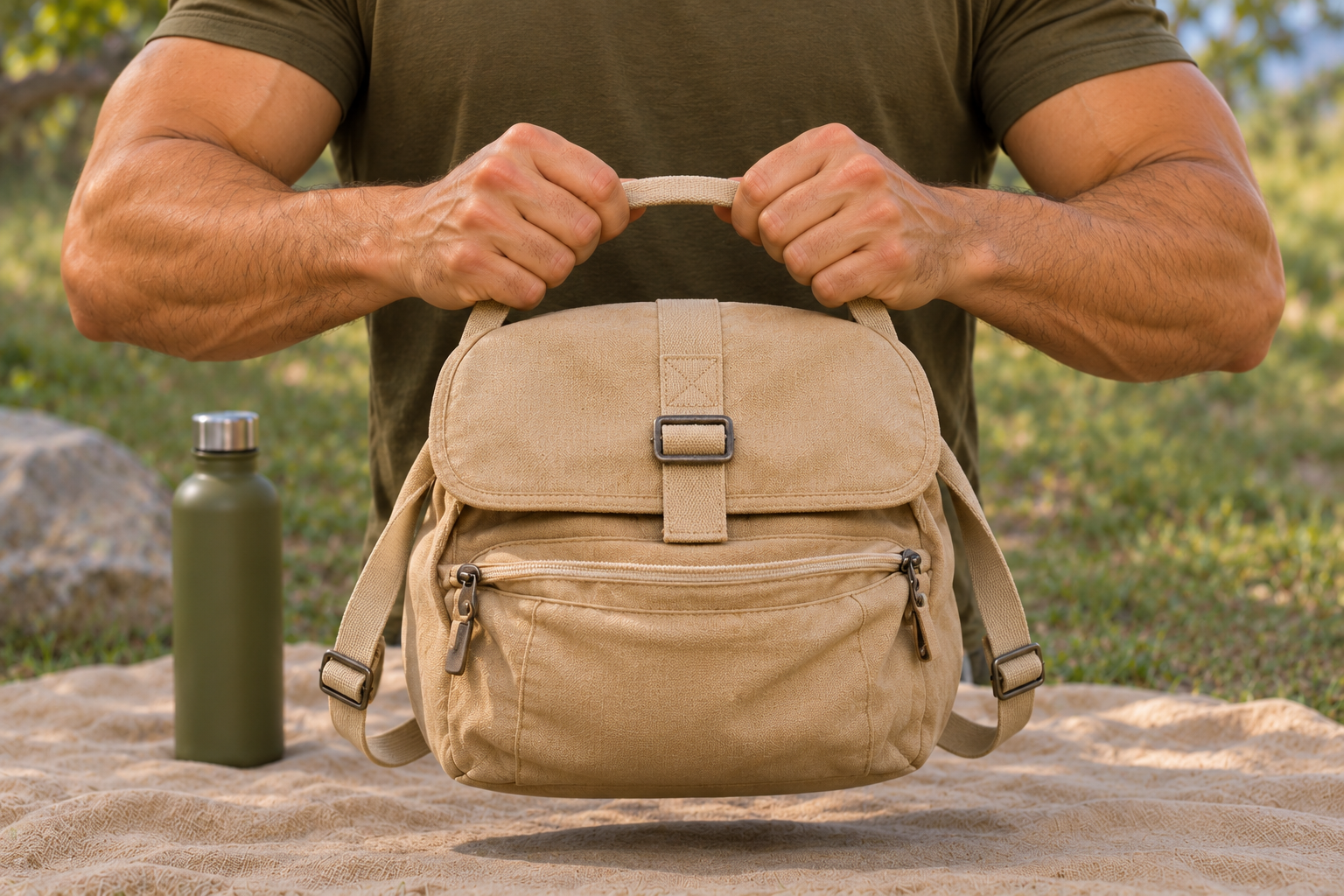
Putting the pack over his shoulder, Ahmad told it, “Now you and I can walk without a packing committee.” There was no one around to laugh with him, so he laughed alone.
The patch beneath the cloth was bare ground again. He bent to pick up a small thread left when he undid the knot, put it with his belongings, and checked around his feet before moving.
He returned to the middle of the clear path and walked toward the bend. He did not reach behind him during those first steps, though he listened more closely for the strap than for his shoes.
He heard only his footsteps. As the pack moved with his shoulders, it moved as one with him, with no loose piece lagging behind to tap against his back.
He lifted his head toward the path ahead. The ground’s color changed slightly at the bend, and the clear markers kept his direction simple. He let his eyes follow the place instead of his hands.
He reached the place he had chosen and found a level patch for his short rest. He lowered the pack gently, loosened the strap, and opened the flap, smiling at the small deliberate pause.
He took out the water and container. This time he spread the cloth across his knees and ate his snack while looking back over the stretch he had walked, plainly visible without having to search for it.
He did not lengthen the rest to make up for the time spent with the pack. He stayed briefly, as he had first intended, and finished the last mouthful before beginning to gather things.
Returning the container to its place, he brushed a grain of dirt from its edge. He no longer cared whether the flap looked smooth outside; he wanted it to stay shut when he let go.
He flattened the strap once with his fingers and lifted the pack. The path was still full of daylight as he turned back, his first steps free of the earlier testing hesitation.
He passed the patch where his belongings had sat before him. He did not stop or look for traces of their arrangement. He recognized it by the wider edge and walked on.
On his back, the bottle, container, and clothing remained in the same pack. The strap’s end lay quietly against the fabric, making no sound with his next step.