
Inspired by a true story. Some characters, situations, dialogue, and chronology have been reimagined or combined for narrative purposes.
An animal picture sat in the middle of the page Ahmad's friend had sent. Everything around it looked finished. At the message's end was one question about that picture from the internet: could he use it?
The faint hum of the air conditioner and the lamp’s warm glow were the only things interrupting the late-night quiet.
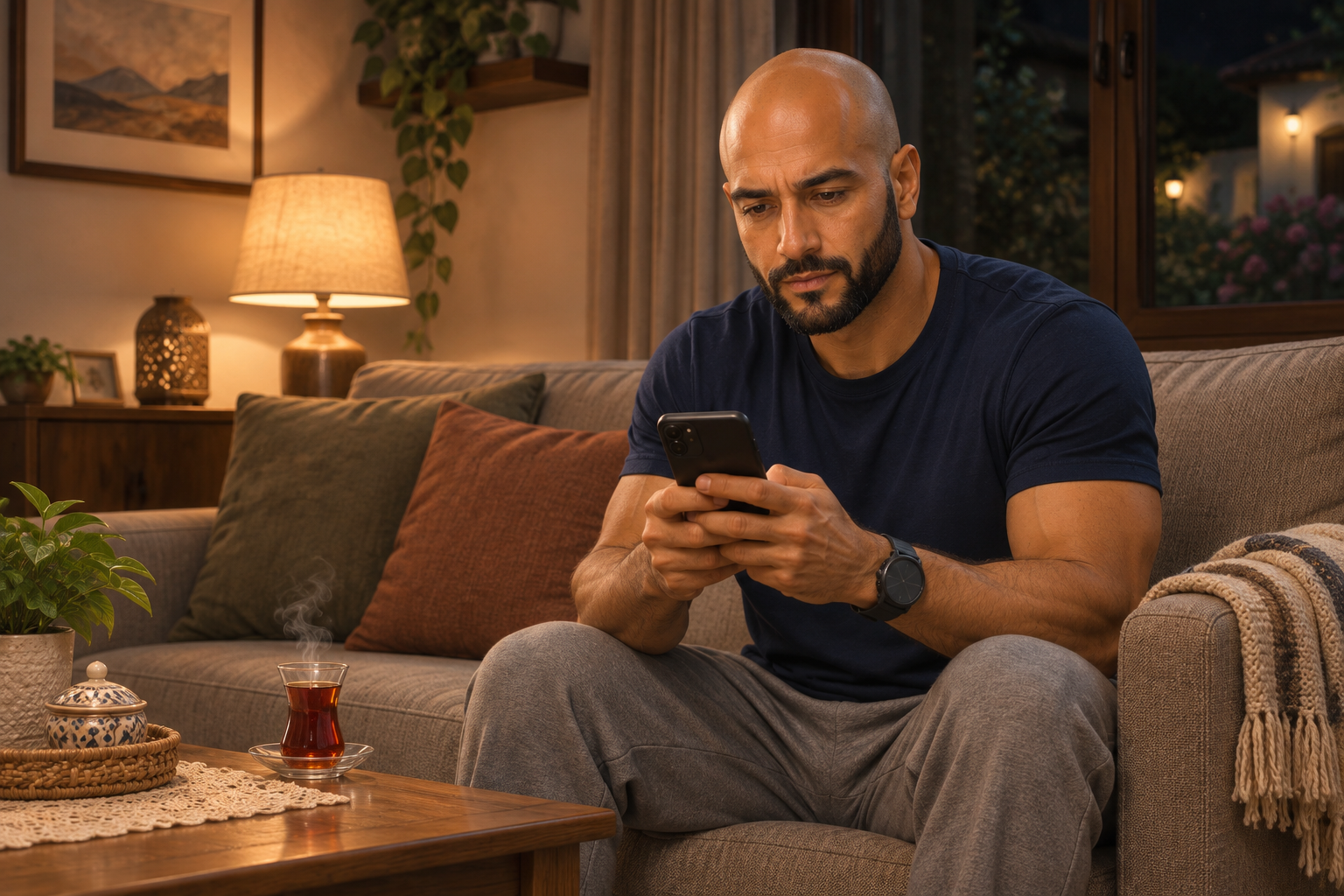
Ahmad read the message standing, a hand already reaching to turn off the light.
He had thought his day was over, but the message brought him back to attention; he left the light on and tilted the phone toward his face.
His friend was preparing a small educational piece for children and wanted to include an image he had found while searching online.
He explained that it would make the page friendlier and easier for children, and that he did not want to leave the space empty.
The picture seemed suited to the text.
Its colors were clear, the animal filled the frame, and no owner's name was visible.
His friend had chosen it to catch the eye, leaving the harder question until the page was nearly finished.
But the friend was not asking whether it looked good.
He was not seeking an opinion on its color or placement; he wanted to know whether he could use it without crossing a line he could not see.
His question was simple, the sort that invites a quick answer. Perhaps he thought Ahmad, who disliked leaving questions unexamined, could find an answer in moments.
“If the image is posted for everyone to see, can I use it?”
“I'll check quickly. Do you have the page where you found it?” Ahmad wrote. A link arrived. “Would crediting this source underneath be enough?” He opened it and found another copy, with nothing identifying its creator.
In the kitchen, his wife was putting away what remained of dinner. He heard a soft clink of dishes, then a drawer closing gently. From the quiet in the living room, she knew he was still standing by his phone.
Without turning around, she called:
“Is the lamp staying up with you?”
Ahmad smiled, then sat at the end of the sofa, phone in hand. His shoulders eased after standing for so long, but he kept hold of the screen as if an answer might appear if he gave it one more minute.
“A friend is asking about an image. I don't want to answer off the top of my head.”
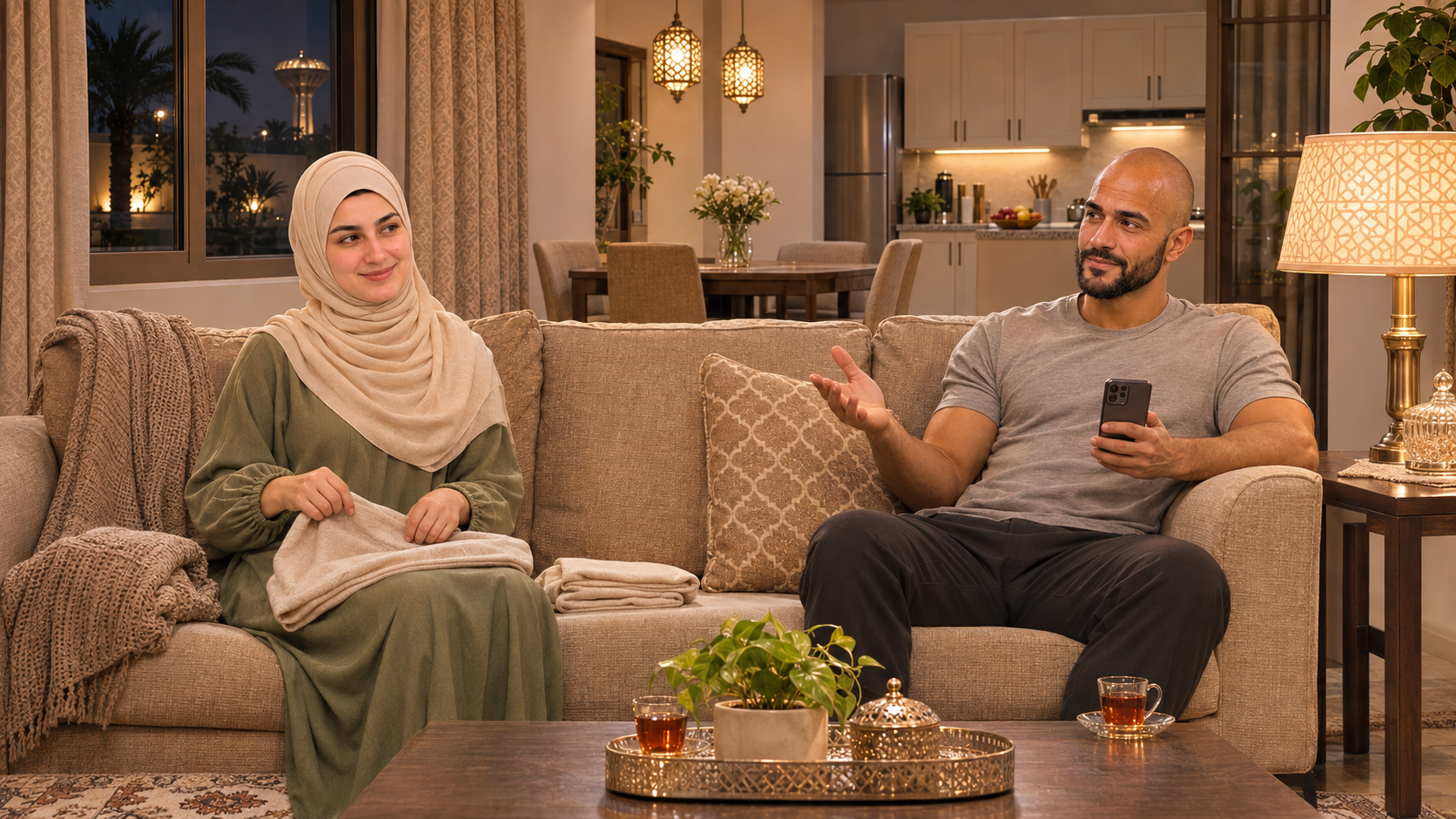
His wife sat at the other end of the sofa, folding a cloth. He said, “The page he got it from doesn't tell me who made it.” “Even the picture arrived without a name tag,” she replied.
He laughed and returned to the link, impatient for a name to end the circling. Comparing the copies, he noticed one had a narrower edge. The other included a margin he had not seen.
He mentioned it in a message. The reply was immediate. “That one's better. Shall we use it?” Ahmad erased his first answer. “It's clearer, but permission is still an open question.”
There was a trace of writing in the margin, insufficient to attribute the image. They returned to the page that copied it; it referred to another page. Neither knew whether it was the beginning or another stop.
Ahmad knew the feeling: finding the last door becomes the task, and you forget why you entered the first. He brought the phone closer, then drew it back as his eyes tired. He was collecting possibilities more than approaching an answer.
“I need the page tonight. I don't have time to start again,” his friend wrote. Ahmad looked at his abandoned tea. He had offered help, not a way to recover time already spent.
Ahmad remembered starting with “I'll check quickly.” No one had asked him to guarantee speed; he had added it because he liked being useful. He wrote, “I rushed when I said I'd check quickly. I still haven't found the creator.”
“At least I didn't get lost on my own,” his friend replied. Ahmad smiled, resting the phone on his arm before reading again.
He opened an official World Intellectual Property Organization reference. It distinguished expression from an underlying idea, and explained that publishing work online does not by itself make it freely reusable.
He sent the link and a brief summary. “This explains the general principle, not a ruling on your situation. I haven't established the creator or licence. I can't guarantee anything about this picture. For a specific legal opinion, ask a qualified professional.”
The typing indicator moved. Ahmad imagined his friend looking at the picture's space in the prepared page. He opened no new link. He let the man answer the question further searching had not changed.
A voice message arrived. “If I remove it, the page will look unfinished.” That was no argument about rights. It was the disappointment of someone who liked his work and now had to lose part at the last moment.
“What was the picture doing on the page?” Ahmad asked. His friend repeated the question to himself. It caught the eye before the reading. The picture itself held no answer required by his own text.
His friend proposed rearranging the page without a picture that night and continuing the source search later. Ahmad agreed it was an editorial choice he could try now, not a legal clearance for any other version.
He composed the reply with the phone in his hand. Reading it once, he cut a sentence that sounded certain about something unverified. He sent it and set the phone by the cup, leaving the last search page open.
His wife passed through the room. “Did you find the photographer?” He shook his head. “We reached the deadline first.” At her questioning look he explained that this version would go out without the picture.
He finally lifted the cup, then put it down after tasting cold tea. His wife collected it with the other things. “This missed its deadline too.” He went with her to the kitchen before the phone sounded again.
Back in the living room he found a short message: his friend had rearranged the work, but still had no reliable source for the picture. There was no finished version for Ahmad to approve, just an account of the choice.
His wife passed through the room again. Ahmad looked towards her, then returned to a last reply. There was no creator's name to add. He left that part unanswered rather than substituting the page that had copied it.
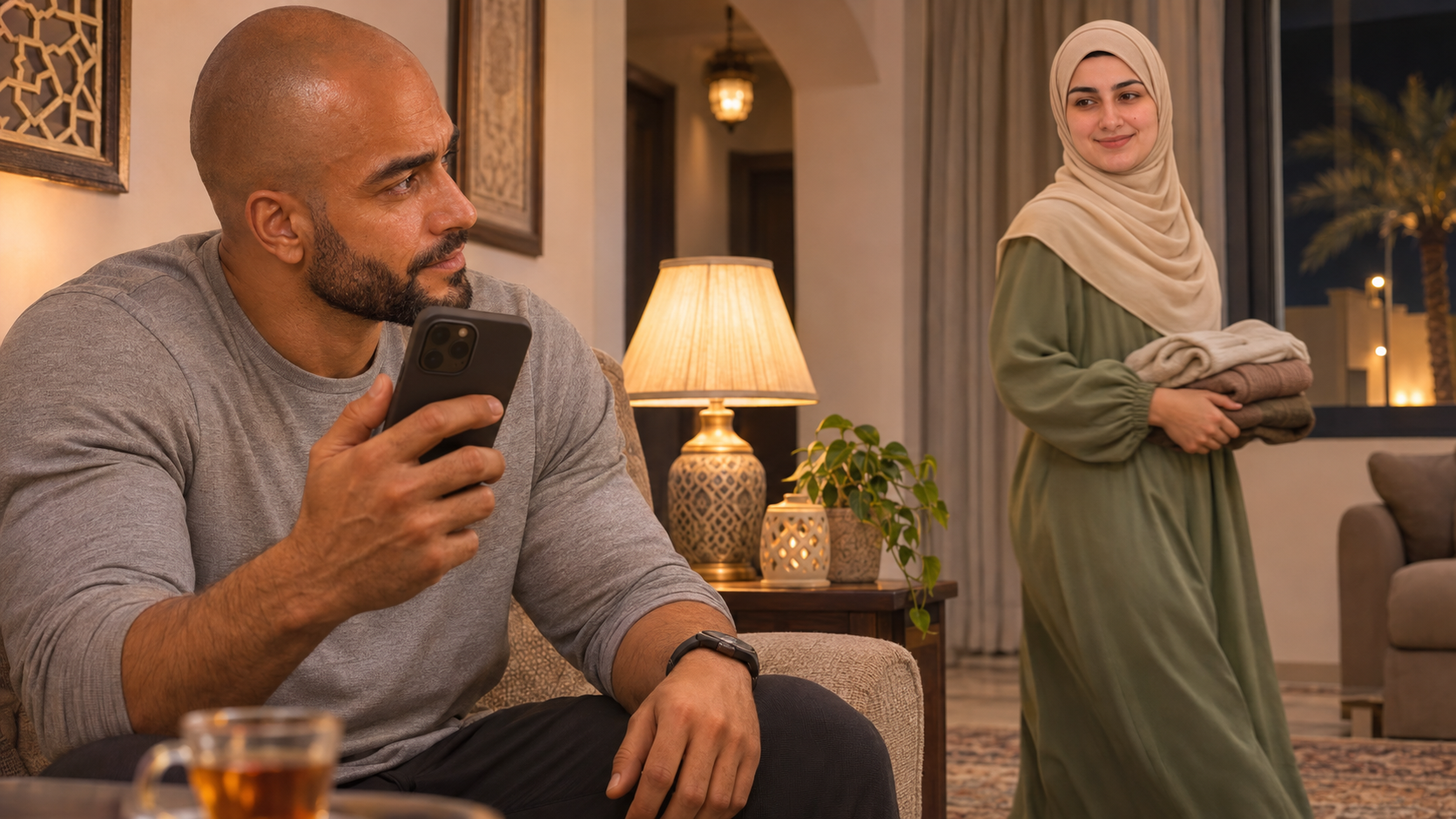
When he darkened the screen, the lamp's reflection lingered on its glass. This time he reached for the light switch and turned it off, without opening another door for the picture that was not his.
Source: Frequently Asked Questions on Copyright, World Intellectual Property Organization. Not legal advice.
Official source: https://www.wipo.int/en/web/copyright/faq-copyright